
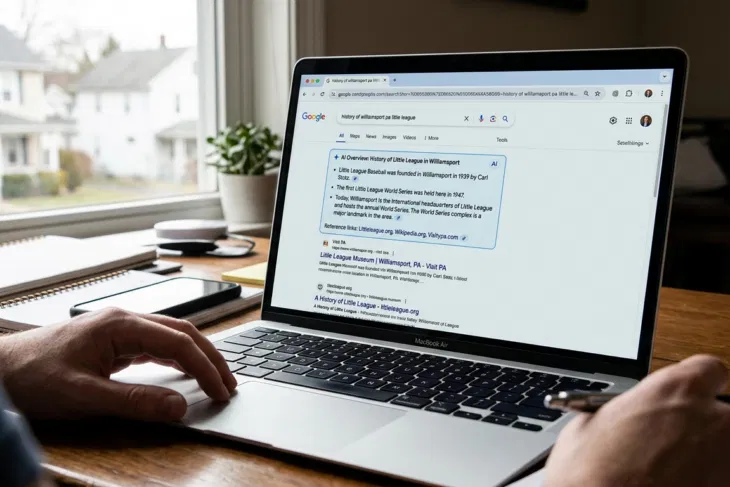
If you’ve noticed your website traffic looking a little… off lately, you’re not imagining it. One of the biggest changes in search right now is the rise of AI-generated overviews. These are the summaries that show up at the top of search results and answer a user’s question before they ever click a link.
For users, it’s convenient. For businesses? It’s a shift that’s impossible to ignore.
AI overviews are designed to give quick, direct answers. Instead of showing a list of links and letting users explore, search engines are now doing the summarizing for them. That means fewer people feel the need to click through to actual websites, especially for basic questions.
This is where things start to impact your traffic.
If your content is focused on simple, informational topics, like “what is,” “how to,” or quick tips, you may start seeing fewer clicks, even if you’re ranking well. In some cases, your content might still be used to inform those AI summaries, but you’re not getting the visit to your website.
So yes, traffic can drop. But that doesn’t mean your website is suddenly useless. It just means the rules have changed.
The key difference now is this: visibility doesn’t always equal clicks anymore.
Instead of focusing only on getting people to your site, you also have to think about how your brand shows up within search results. If your business is mentioned, quoted, or clearly associated with helpful information, you’re still building awareness, even if the user doesn’t click right away.
That said, you still want traffic. So how do you adapt?
First, focus on content that goes beyond basic answers. If AI can summarize it in two sentences, it’s probably not enough. Deeper insights, unique perspectives, real examples, and opinion-based content are much harder for AI to replace, and much more likely to earn clicks.
Second, make your content more experience-driven. Case studies, before-and-after examples, and personal insights give users a reason to click through because they can’t get the full picture from a summary alone.
Third, double down on your website’s purpose. Your site shouldn’t just inform, it should also convert. Clear messaging, strong calls to action, and a user-friendly experience matter more than ever when fewer people are landing on your pages.
It’s also worth thinking beyond search. Social media, email marketing, and direct traffic are becoming more important as search behavior shifts. If you rely entirely on Google for traffic, you’re putting yourself in a risky position.
And finally, don’t panic.
Every major shift in search has felt like “the end” of something. SEO, blogging, and organic traffic are just a few examples. But what usually happens instead is evolution. Businesses that adapt early tend to come out ahead.
AI overviews aren’t the death of websites; they’re just changing how people find and interact with them.
In 2026, it’s not just about being ranked. It’s about being relevant, recognizable, and worth the click when it counts.




 We proudly support the LGBTQ+ community