
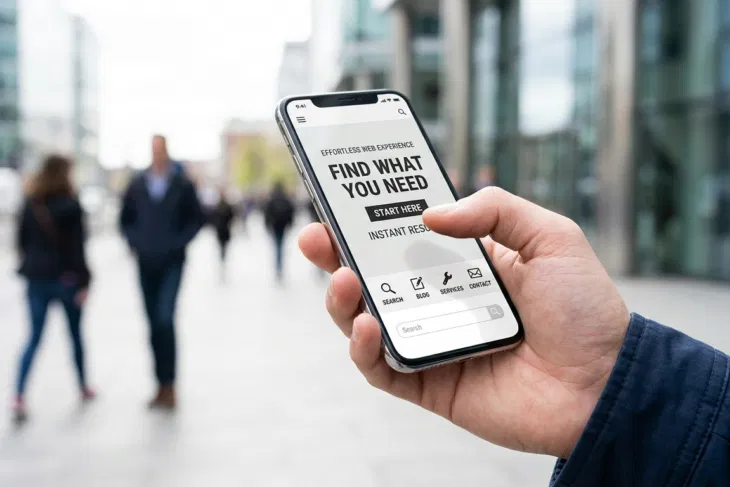
Great websites feel effortless. You find what you need, move through the pages without friction, and leave with a positive impression. But behind that ease is a set of deliberate choices that most visitors never notice.
Speed is the first impression
Before a user reads a single word, they have already formed an opinion based on how fast your site loaded. Research consistently shows that most visitors will abandon a page that takes longer than three seconds to appear. A slow website signals neglect, regardless of how polished the design is once it finally loads. Prioritizing performance is not a technical nicety; it is an act of respect for the visitor’s time.
Navigation that gets out of the way
People visit websites with a goal in mind. Clear, minimal navigation helps them reach that goal without confusion. The best menus are short, logically labeled, and structured around what users want rather than how the company is organized internally. If someone has to read a menu item twice to understand where it leads, something has gone wrong.
The best menus are structured around what users want, not how the company is organized internally.
Readability matters more than style
A beautiful font that strains the eyes is a bad font. Good typography means choosing typefaces with enough contrast against their background, setting line lengths that feel comfortable to read (typically 60 to 75 characters per line), and giving text enough breathing room with generous line spacing. The moment a visitor has to squint or zoom in, you have lost them.
This also applies to color choices. Low-contrast text is one of the most common usability failures on the web, and it disproportionately affects users with visual impairments. Accessibility and good design are not in conflict; they usually point in the same direction.
Mobile is not an afterthought
The majority of web traffic now comes from phones. A site that works beautifully on a desktop but breaks on a smaller screen is, by most measures, not a good website. Responsive design should be baked in from the start, with touch-friendly buttons, readable text that does not require zooming, and layouts that reflow gracefully across screen sizes.
Visual appeal builds trust
Aesthetics and usability are more connected than they might seem. Studies on what researchers call the “aesthetic-usability effect” find that people perceive visually appealing interfaces as easier to use, even before they interact with them. Consistent use of color, well-chosen imagery, and intentional whitespace all contribute to a sense of quality that builds credibility from the first glance.
Clarity over cleverness
There is a temptation in web design to be original in ways that confuse people. Unconventional navigation patterns, vague microcopy, and abstract calls to action can feel fresh in a portfolio but frustrate real users. The goal is to guide people toward what they came for, not to showcase how inventive the design team can be. Clarity, warmth, and simplicity are harder to achieve than they look, and far more valuable when you get them right.
A user-friendly website is not the result of any single decision. It is the sum of dozens of small choices, each made with the visitor in mind. Get those choices right, and the experience feels invisible in the best possible way.



 We proudly support the LGBTQ+ community