
Most non-profit websites were built to exist, not to perform. They have a mission statement, a few photos, maybe a donate button buried in the footer, and not much else working in their favor. If your organization relies on online donations, volunteer sign-ups, or event registrations to keep things moving, your website has to do real work, not just look presentable.
Here is what actually separates a non-profit site that raises money from one that just takes up server space.
Your Donation Page Is Either Working or It Isn’t
The donation page is the most important real estate on a non-profit website, and it is almost always the most neglected. A confusing layout, too many steps, or a form that does not load properly on a phone will stop a donor mid-intention. People who are ready to give do not wait around.
A high-converting donation page keeps the form above the fold, offers preset giving amounts alongside a custom field, and explains in plain language exactly what a gift of $25 or $100 actually does. Specificity matters. “Your $50 provides school supplies for one student for a semester” moves people in a way that “support our mission” simply does not.
If you are not sure whether your current site is converting the traffic it already gets, the reasons a website stops generating leads apply just as much to non-profits as they do to businesses.
Storytelling Through Imagery Does the Heavy Lifting
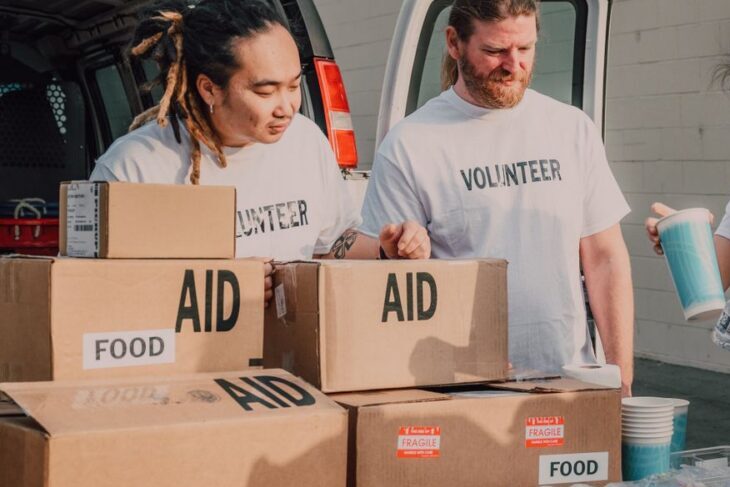
Stock photos of handshakes and generic smiling faces do not build trust. Real photos of the people your organization serves, the volunteers who show up, and the moments that define your work do. Donors give to causes they feel connected to, and that connection almost always starts visually before anyone reads a word.
This is worth investing in. Even a single session with a photographer capturing your team in action can supply a year’s worth of content across your website, email campaigns, and social channels. Lifestyle branding photography builds the kind of trust that a logo and a tagline cannot replicate on their own.
Accessibility Is Not Optional
Non-profits serve communities, and those communities include people with visual impairments, cognitive disabilities, and motor limitations. An inaccessible website excludes the very people many organizations exist to support, and it also creates legal exposure under ADA standards.
Accessible non-profit website design means proper color contrast, keyboard navigation, screen reader compatibility, descriptive alt text on images, and forms that work for everyone. It is not a checklist item to get to eventually. It is a reflection of your values, built into the structure of your site from the start.
SEO for Mission-Driven Organizations
When someone in your area searches for “food bank near me” or “how to volunteer in Williamsport,” your organization should have a shot at showing up. Non-profit SEO is not fundamentally different from any other kind, but it does have a specific opportunity: local intent.
Pages built around the specific communities you serve, the problems you address, and the geographic areas you operate in will outperform a generic “about us” page every time. Blog content that answers real questions, event pages that are properly indexed, and a Google Business Profile that is kept current all contribute to organic visibility that does not require ad spend.
It is also worth understanding how search is changing. AI-generated search results are reshaping how organizations get found online, and non-profits that publish clear, well-structured content are better positioned to appear in those results.
Volunteer Sign-Ups and Event Registrations Need Their Own Focus
Donations get most of the attention, but for many non-profits, volunteers and event attendance are just as critical to operations. These conversion points deserve the same design care as a donation page.
- Volunteer forms should be short. Ask for what you actually need at the point of sign-up, and collect the rest later.
- Event pages should answer the obvious questions immediately: date, location, what to expect, and how to register. Do not make visitors dig for logistics.
- Confirmation emails and follow-up sequences reinforce commitment and reduce no-shows.
A well-built site handles all of this without requiring staff to manage it manually every time someone clicks a button.
What a Purpose-Built Non-Profit Website Actually Looks Like
It loads fast. It works on every device. It puts the most important actions, donating, volunteering, registering, within one or two clicks from the homepage. It tells a story that makes a visitor feel like giving is obvious, not obligatory. And it is built so that your team can update it without calling a developer every time something changes.
That last part matters more than most organizations realize. A website your staff cannot update is a website that slowly goes stale. A managed WordPress site with proper training and ongoing support keeps your content current and your credibility intact. There are clear signs when a non-profit website is actively costing an organization donors, and stale content is near the top of that list.
At Positive Medium, we have spent more than 12 years building websites for organizations that need more than a digital brochure. We work with non-profits, community groups, and mission-driven teams across Pennsylvania and beyond, offering custom packages, flexible payment options, and a dedicated project manager who stays with you from the first conversation through launch and beyond.
If your website is not pulling its weight during your next campaign or fundraising push, we would be glad to take a look. Reach out to schedule a free consultation and we can talk through what your organization actually needs.



 We proudly support the LGBTQ+ community